

As I keep reading The Design of Everyday Things, one idea has stuck with me: an error or fault in a product or service can actually lead to a positive experience. Possibly even more positive than if the error never happened in the first place…
But how?
First, think of an app or service where you ran into a problem. It doesn’t have to be digital, it could be in person too. Like the bus being late, or your food delivery saying “arriving in 10 minutes” for half an hour.
Recently, I opened an account with a new bank and was waiting on my debit card. The local shipping company messaged me to pick a delivery date and time (I needed to be home to receive it). The day came and went, and I heard nothing. I waited a day, thinking maybe they missed the window and would come the next day at the same time? Nothing. Waited another day. Still nothing.

On the third day I called them, and there was no option to speak to a person… It was all pre-recorded messages pointing you to their WhatsApp. And when I messaged them there, there was no live chat either. It said “we’re connecting you to a support staff, please share your details so we can assist you”, but after I typed out my message and all my details: nothing! It was like the chat froze. The negative emotions flooded in: frustration, annoyance, anger, and even hate!
(Side note: I ended up having to call the bank to get them to contact the shipping company and sort it all out! Terrible experience overall, and I didn’t even need the card urgently…)
But why did I feel so strongly? Because I didn’t feel in control. Imagine if, on the day of the delivery, they had messaged me this:
“Hi Ammaar, we’re sorry for the inconvenience, but we’ve had to reschedule your delivery to 14th October between 5pm and 7pm. Your package is now marked as a priority for the next delivery. You can also change your delivery slot or switch to pick-up by clicking here. Rest assured, timely delivery of your package is our top priority. Thank you for choosing [company name].”
I would have felt completely different. Sure, I might be a little annoyed if I’d cancelled my evening plans that day, but I would feel in control. I’d know the delivery was delayed and when I’d get it, and I could pick a new time or switch to pick-up. I wouldn’t be kept in the dark.
Earlier this year I was in Kelowna, Canada, and would take the bus to university. Like every other university student, I’d often catch the bus that got me to campus JUST in time. Sometimes strollers or wheelchairs getting on and off would delay the bus by a minute or two (which feels like forever when you’re waiting for a bus you needed to be on 20 minutes ago). But that never spoiled the bus for me. I never dreaded the ride. Thanks to the transit app, I could see the live location of the bus… I was in control. I wasn’t kept in the dark.
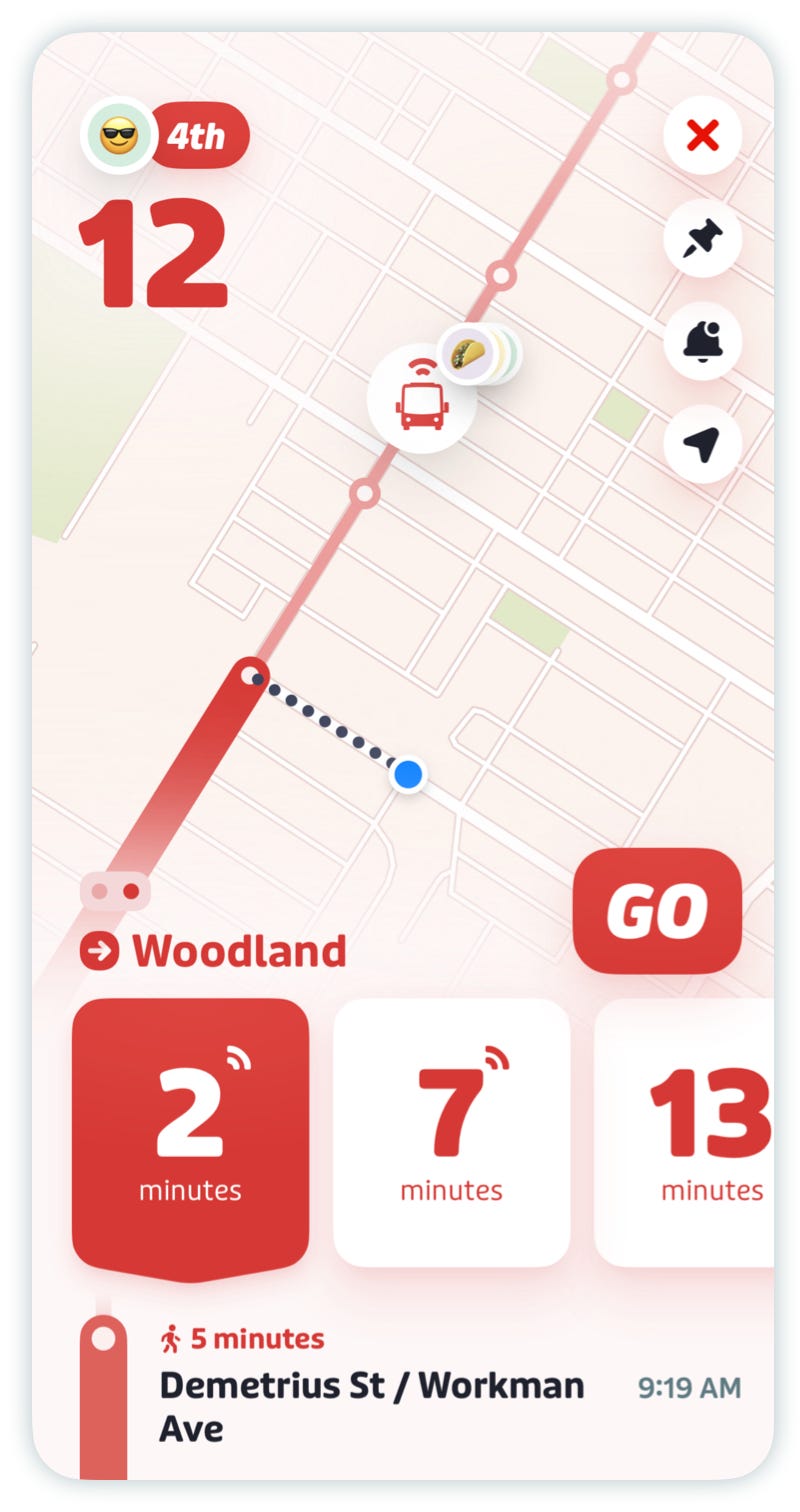
So a big part of how we experience a product comes down to feeling in control.
Why does feeling in control matter so much?
Don Norman (the cognitive scientist who wrote the book) describes exactly what happened with my debit card. When things don’t go as planned we get frustrated and angry, “especially when neither the reason nor the possible remedies are known.” I didn’t know why my card hadn’t shown up, and I had no way to fix it.
Then he says this: “Feedback provides reassurance, even when it indicates a negative result. A lack of feedback creates a feeling of lack of control, which can be unsettling.”
A message saying my delivery is late is still bad news, but it’s bad news I can plan around. The bus was late too, but I could watch it coming.
So how do we make people feel in control?
A few ways. First, some definitions from the book:
Feedback: communicating the results of an action.
Conceptual model: a highly simplified explanation of how something works.
Mapping: the relationship between the elements of two sets of things (like which light switch controls which light).
Feeling in control needs good feedback, a good conceptual model and good mapping.
Good feedback tells you that your action was received, so you’re not left in the dark guessing whether it went through.
Think of a washing machine or a microwave. If you hit a button and no light came on and there was no sound, you wouldn’t know if the machine got it. You might press it again, which could actually turn it off if the machine did get it the first time! The machine received the input, it just didn’t have the right feedback to tell you. Cue frustration, annoyance and all the rest.
A good conceptual model helps you understand what’s going on and sets your expectations. In my shipping example, my conceptual model was that once I got the message saying my delivery was scheduled, the whole system was automated. So if the delivery got delayed, I’d get an automated message letting me know.
We usually pick up conceptual models from past experiences, and in this case it’s Amazon. Amazon may or may not have made shipping a lot harder for every other company, because you’re always getting updates on your order: when you place it, when it ships to the local center, when it’s out for delivery, and when it’s delivered. So now we expect that from everyone.
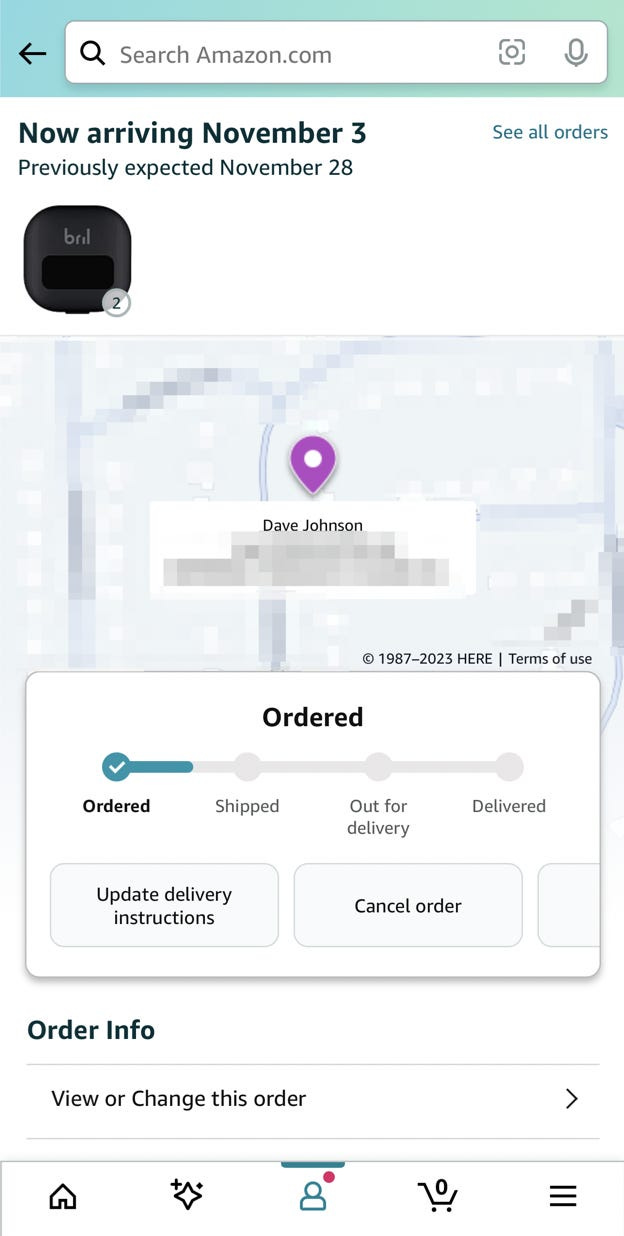
Domino’s did the same thing with pizza back in 2008, with a tracker that shows your order being made, going in the oven, and heading out for delivery.

And good mapping gives you better intuition and better expectations. In the transit app, I can see a map with the bus icon, the route, and where I am. It’s an intuitive mapping: the bus on the map is where the bus is in the real world. Since that mapping is accurate, I have a good idea of where the bus is and how long it’ll take to get to me.
Now think of a row of light switches in a corridor. Say the first switch is for the light closest to you, but the second switch is for the light furthest away, and the third is for the one in the middle. That’s a bad mapping, and you’ll get annoyed every time you flick the wrong one.

Back to the error
Errors will always happen. Buses run late and deliveries get rescheduled. Whether you walk away annoyed or happy mostly comes down to whether you felt in control while it happened. If that shipping company had sent me that one message, I’d probably have walked away impressed with them.
Has a company ever handled a mistake so well that you liked them more after?