

Every public washroom I go to has a different manufacturer, different style and different color of gesture-controlled tap, gesture-controlled soap dispenser and gesture-controlled tissue dispenser. And it seems each one was designed for a specific alien community from all across the galaxy, but the tariffs were too high, so they settled and sold them on Earth.
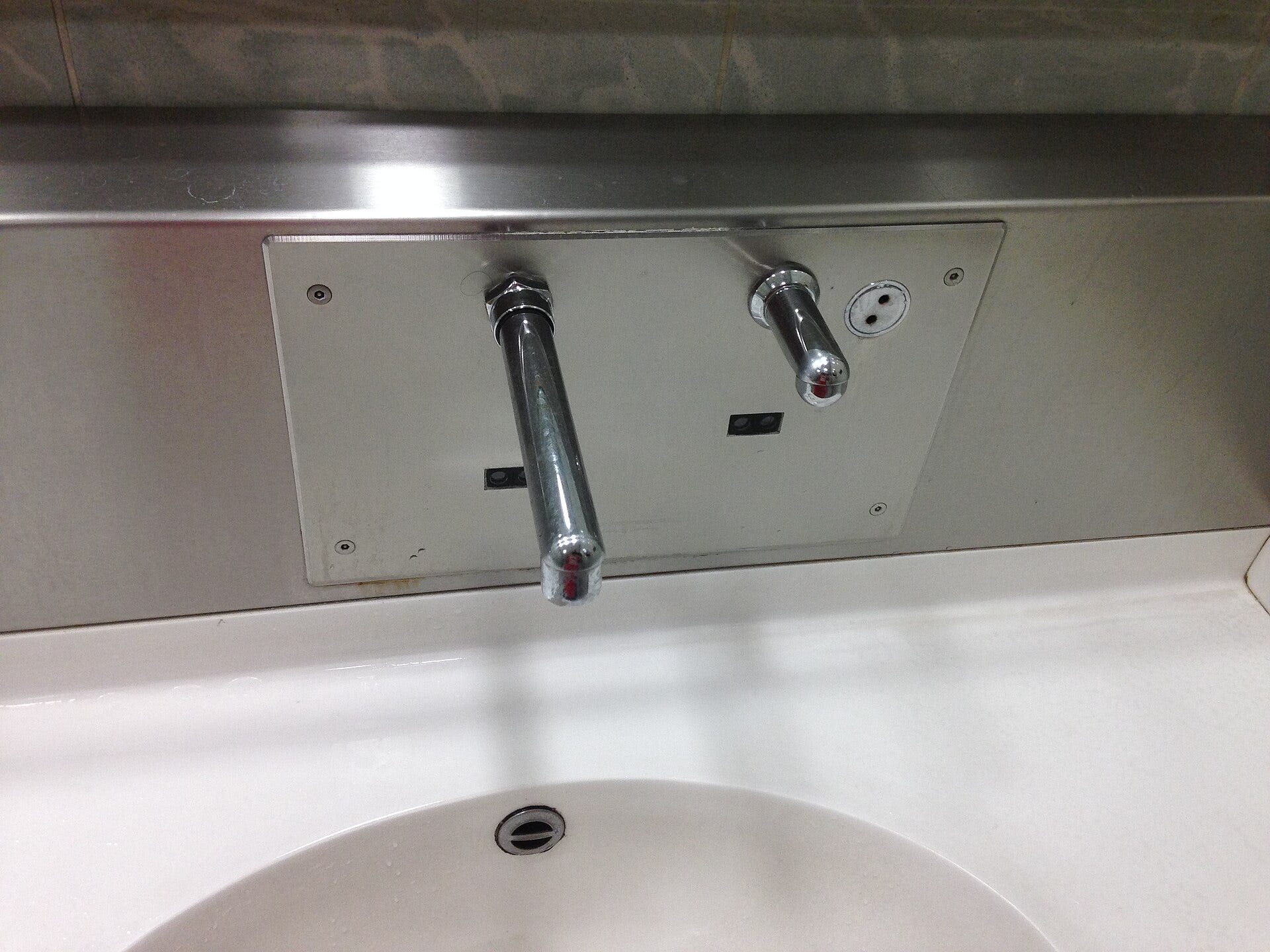
Why is it so hard to get right? Well, it’s NOT your fault, it’s bad design.
The invisible beam
Ok, before we get into what’s wrong with them, let’s look at how these things actually work. And they go back further than you’d think.
In 1913, Edgar Littlefield, an inventor in Seattle, patented a urinal that flushed itself. The trick was turning the bowl into a battery: metal plates (electrodes) in the bowl picked up the chemical change when urine arrived, and that set off the flush. He even suggested toilet paper treated with a chemical to make the signal stronger.
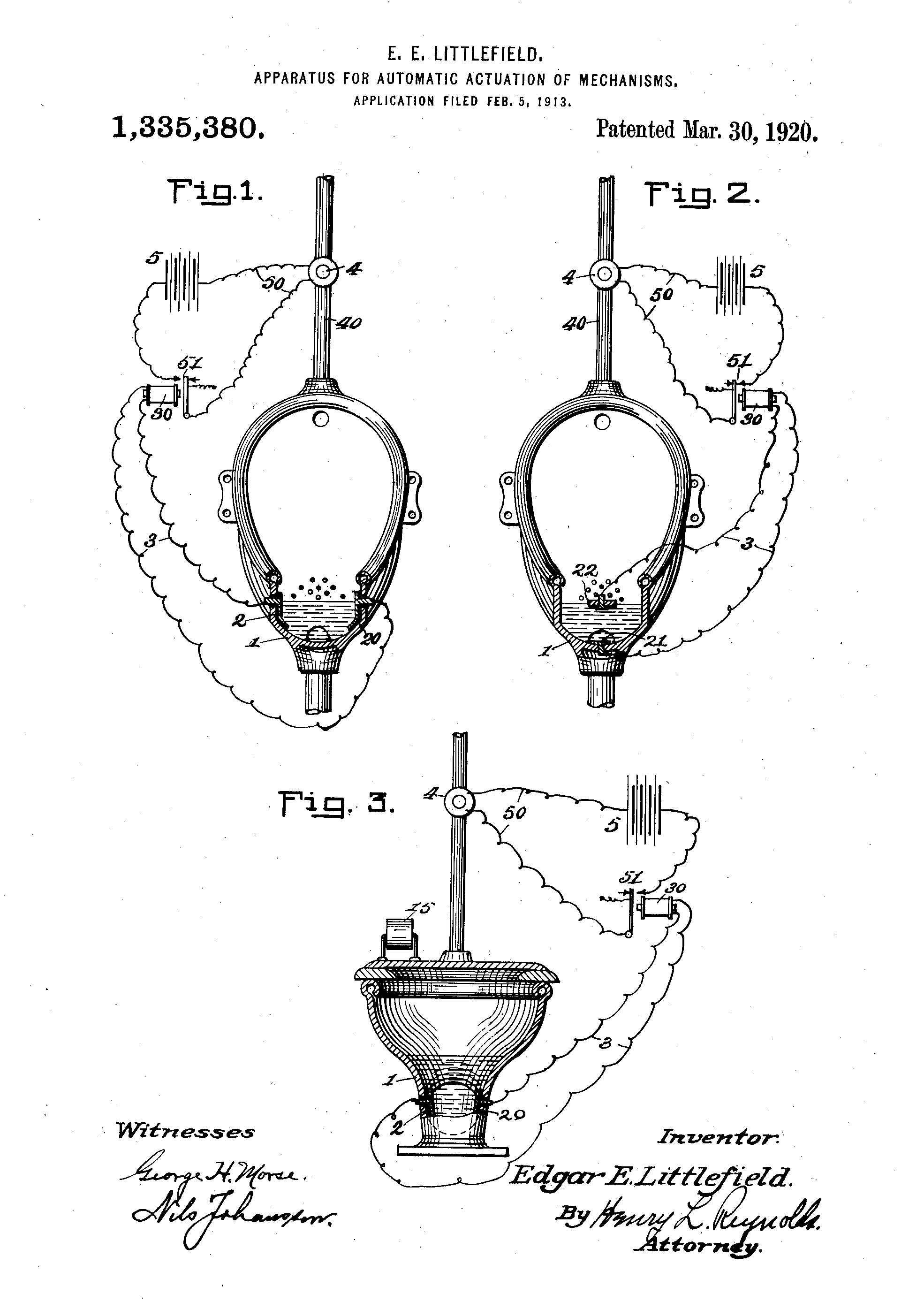
The more I think about this, the more icked out I feel, but I learned about it, so I had to share :)

Ok, so how do the ones we use today work?
Most of them are proximity sensors, which means all they do is sense that something is close. A tiny light fires pulses of infrared (the same invisible light your TV remote uses), and a detector right next to it measures how much bounces back off your hands. If enough light comes back, an electromagnet pulls a plug out of the water’s path and the water flows.
The light and the detector sit side by side, often in the tip of the spout, both pointing down. The light shines down in a narrow cone, and the detector looks down in its own narrow cone. Your hand only counts when it’s in the spot where the two cones overlap, so the light can hit it and bounce straight back into the detector. A 1988 tap patent from a Chicago plumbing company put that spot at about 1 to 6 inches below the spout, in a cone of about 30 degrees. The light is even angled on purpose so reflections off the sink bounce away from the detector.
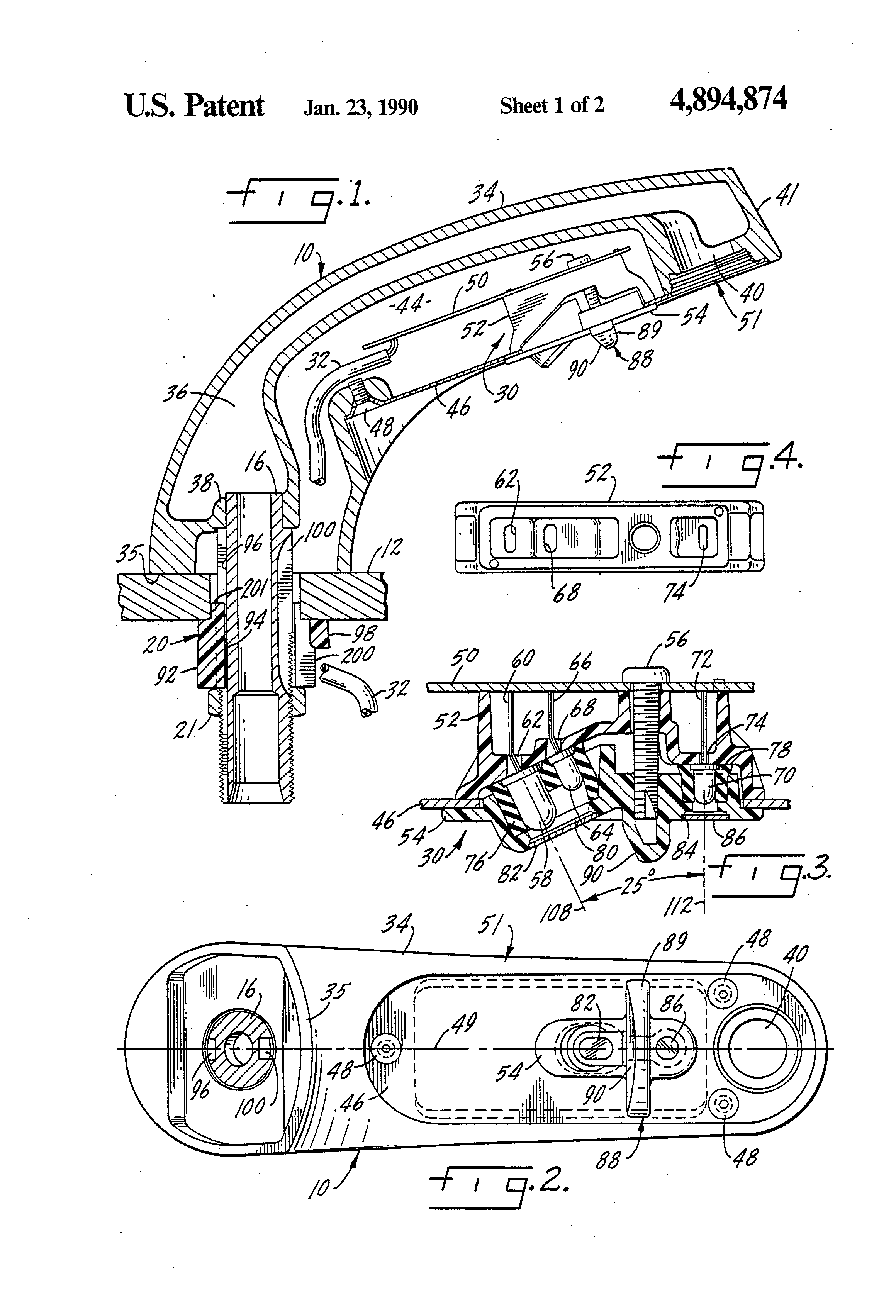
So if you’ve put two and two together, that’s why your hand has to be in one exact spot. Anywhere outside it, and the light either misses you or bounces somewhere the detector isn’t looking. Soap dispensers are even fussier: one needs your hand within 4 inches for about a second.
The other catch is that it only measures how much light comes back, so the color and shine of whatever is under it matter as much as where it is. A sensor-chip maker put it plainly in 2016: with regular infrared sensors, “if you wear white, it will see a lot of light coming back,” and they “typically have difficulty with dark colors.”
“Wear white” here means anything white in the beam, so a white sleeve hanging over your wrist can throw it off. But the hand is what actually goes under the sensor, which brings us to the elephant in the room: does skin color matter?
In 2015, T.J. Fitzpatrick filmed a soap dispenser at the Atlanta Marriott that wouldn’t give him soap but worked for his white friend. He said he tried about 10 dispensers. The video has 3.3 million views. An engineer who looked at the video said these sensors use near-infrared light, and if a surface absorbs that light instead of reflecting it, “the sensor will never trigger.” The engineer also doubted skin color explained that particular video, since the palms looked similar, and pointed to the angle of the hand or a touchy sensor.
So I went and checked. A US government science lab measured how much light the skin of 100 people reflects (on the inside of the forearm), and I went through their data. In green light, the lightest skin reflected more than three and a half times as much as the darkest (42% against 11%). In the infrared these sensors use, the gap almost closes: all 100 people reflected between 47% and 58%.
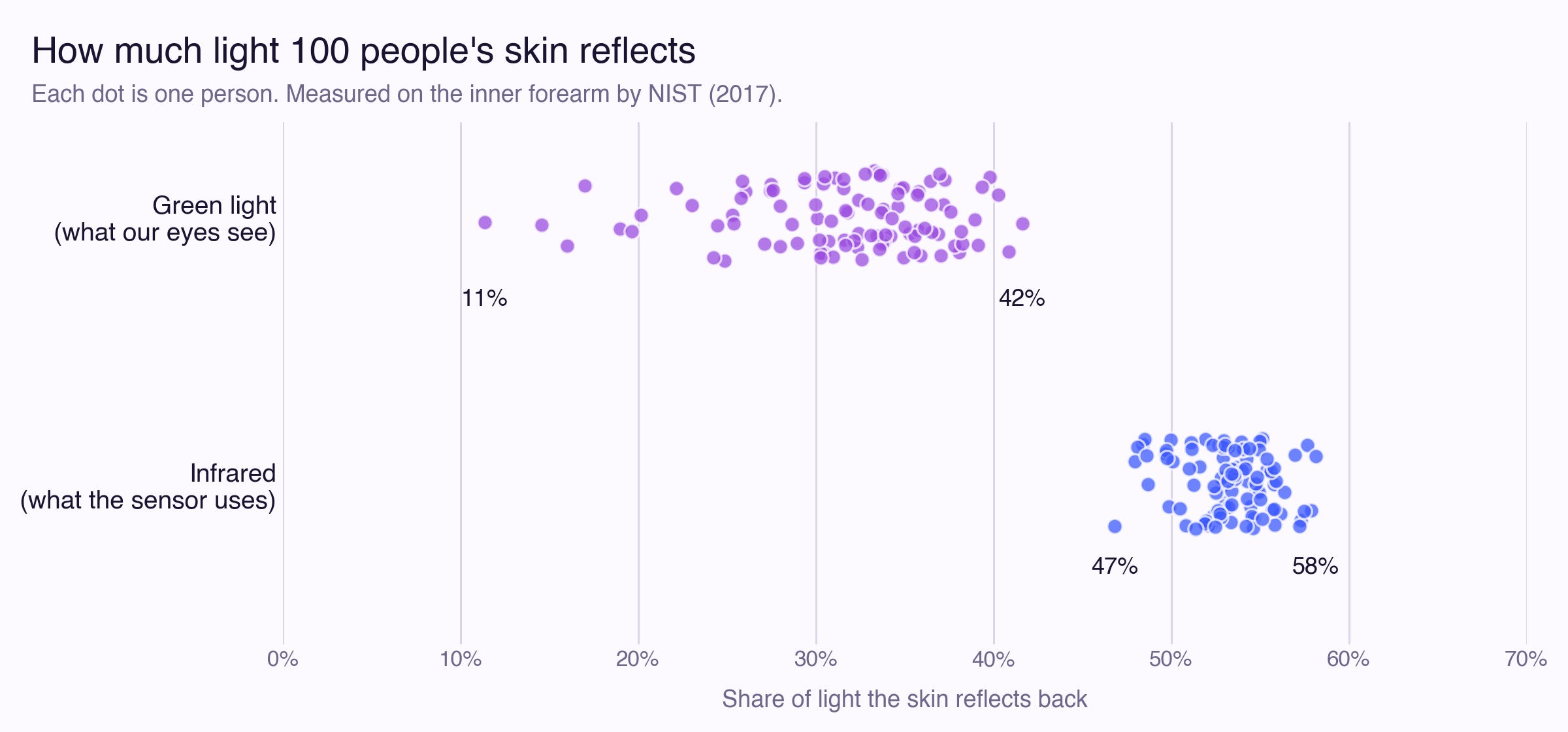
So skin color does matter a teeny tiiiny bit. Darker skin still sends back a little less infrared, and a sensor set right at its limit can miss that hand, especially at a bad angle. The fix is turning up the sensor’s sensitivity.
Light can fool them the other way too. Bright lights, shiny surfaces and sunlight can set them off when nobody is there, which the manuals call “ghost activation.” Honestly, in an industry full of mundane things like taps and toilets, that’s kind of a cool name.

There are timers too. Taps cut off after 10 to 30 seconds even if your hands are still under them. Personally, this is one of the worst parts about these things. While I’m washing my hands, don’t cut off the goddamn water. I’m ready to throw hands with these auto-cutoff things sometimes. Some days I just give up: “You know what? Maybe the universe didn’t want me to have clean hands today.” Because if I have to do an ancestral rain dance every 10 seconds (the rain, in this case, being the tap), I’m done. How important is hygiene, even, yk? (I’m kidding)
Toilets have their own timers. Sensor toilets only get ready to flush after they’ve seen you for 8 seconds, wait 3 seconds after you leave, and flush once every 24 hours if nobody uses them.
Then there’s power, which is a design decision too. If the electricity goes out, you don’t want your washroom going down with it. Most of them run on batteries, like four AAs in a toilet’s flush valve or four D cells in a soap dispenser, and one sensor tap is rated for three years on its batteries. The company that makes Purell puts the battery inside the soap refill, so every refill is also a battery change, which I think is pretty cool.
And then there’s Japan, just doing its thing, being Japan. TOTO, the Japanese toilet maker, made taps that power themselves, using the flowing water to spin a tiny generator, so they keep working in a power outage. Japan keeps being a role model in design and engineering for the rest of the world. I wrote about their mechanical pencils in an earlier issue, and they’re just chef’s kiss.
Also, infrared wasn’t the only way people tried to do this. Like most inventions, it’s a lot of taking inspiration from what came before and changing things. And there are always going to be people who do things differently, which I think is good, for the industry and for humans in general. In the 1960s, Japanese inventors hid antennas in the basin that sensed your hand by its electrical charge, and one 1965 basin from a Kyoto electronics company had three of them, so where you put your hand chose hot, cold or warm water. A 1965 soap dispenser was set off by your hand’s shadow, and a 1986 towel dispenser that worked the same way stopped working when the room lights were off. Others tried sound waves, and even radar hidden in the wall behind a urinal. The newest sensors time how long the light takes to come back instead of how much comes back, which a German maker says stops accidental triggering from people wearing high-vis vests.
Where do I put my hands?
To understand their designs better, let’s break it down by the principles. I wrote about three of these in an earlier issue, using a late bus and a delayed debit card: good feedback tells you your action went through, a good conceptual model sets your expectations, and good mapping makes it obvious what controls what. Together they keep you feeling in control when something goes wrong.
Mapping (how a control relates to what it does): most of these devices have good natural mapping. Place your hand under the water tap and water should flow onto your hands. The soap dispenser is usually attached to the wall or has a pointed spout; place your hand under it and the soap will be dispensed onto your hands. The tissue dispenser is similar.
Signifier (a sign that tells you what to do and where): this is one of the big things that are lacking. You know what to do (affordance), but don’t know where to do it! Whenever I place my hand where I see fit and nothing comes out, I start moving my hand around. I look around and see what other seemingly professional gesture-controlled tap users are doing. Is my hand too close to the sensor? Is it too far? Wait, is this even gesture-controlled? Do I need to move my hand vertically or horizontally? Why am I thinking of vectors when all I want to do is wash my hands?

Discoverability (being able to work out what you can do and what state the device is in): this too is missing. You are given little to no information on the current state of the device. When the soap dispenser doesn’t work, I don’t know why. Is the sensor not recognizing my hands? Is the sensor broken? Or is everything fine but the soap has just run out?
Feedback (the device telling you it got what you did): when nothing happens, nothing tells me why either. Some do have a little light. Back in 1988, that tap patent had an LED that would “glow brightly” when it saw your hands. But on most of them today, the light is a message for the cleaners. One flush valve flashes four times when its batteries are low, which means nothing to anyone who hasn’t read the manual.
Conceptual model (the picture in your head of how it works): I picture it “seeing” my hand. I get frustrated when my hands are clearly under the sensor and the water isn’t flowing. What it actually does is measure how much light bounces back, so a white sleeve, a shiny sink or a high-vis vest can fool it, and moving my hand around is basically guessing.
It reminds me of Don Norman’s tongue-in-cheek list of rules for making things hard to use (he’s the designer who wrote The Design of Everyday Things). The first one is:
“Hide critical components: make things invisible.” - Don Norman, The Design of Everyday Things
Another on the list is “Do not give any feedback.” I’m starting to think some designers read this as a list of rules for making things and never got to the “hard to use” part.
Jokes aside, a lot of this comes down to trade-offs. The bigger the sensor’s zone, the more often the tap turns on for people just walking past. As far back as 1980, a flush-valve patent was already fighting false flushes “activated by room lights, reflected light and momentarily passing people.” The US Department of Energy even tells building managers to tune sensors so they’re “not triggered by users passing in front of the faucet.” So makers keep the zone small, and a small zone misses hands that are right there. There’s usually no perfect answer in the real world, so you pick the trade-off you can live with. It’s not like designers are purposely screwing us over.
Follow the soap
Ok, so if these are this confusing, why does every washroom end up like this? A big part of it is the business side.
The person who chooses the tap and the soap dispenser isn’t the person washing their hands. Norman puts it simply:
“A major obstacle is that often the purchaser is not the user.” - Don Norman, The Design of Everyday Things
Purchasing departments buy on price and on who they already have a deal with, and “usability is seldom considered.”
And it’s not even one purchaser. The tap gets picked when the building is designed, as part of the plumbing. The soap and towel dispensers usually come from whoever supplies the cleaning products. At the University of Arizona, for example, the design rules list the sensor taps under plumbing, while soap dispensers “are provided by Custodial Services via their soap vendor” (Custodial Services being the cleaning department). So each device comes through a different person and a different deal, and that’s how you end up with the alien washroom.
The dispensers are often free, because the money is in the refills. Georgia-Pacific, one of the big US paper companies, doesn’t sell its touchless towel dispensers. It leases them for “a small initial payment” and makes its money on the towels, which only fit its own dispensers. Think of the Coca-Cola soda machine at a restaurant: you’d expect only real Coke to come out of it, and Georgia-Pacific built its dispensers on that idea, with only its own towels inside. The lease even says Georgia-Pacific can “enter the premises” to take its dispensers back. The State of Georgia’s purchasing list prices touchless soap dispensers at $0.00, “free with purchase,” next to refills at about $55 a case. And some soap dispensers have keys built in so only that company’s refills fit.
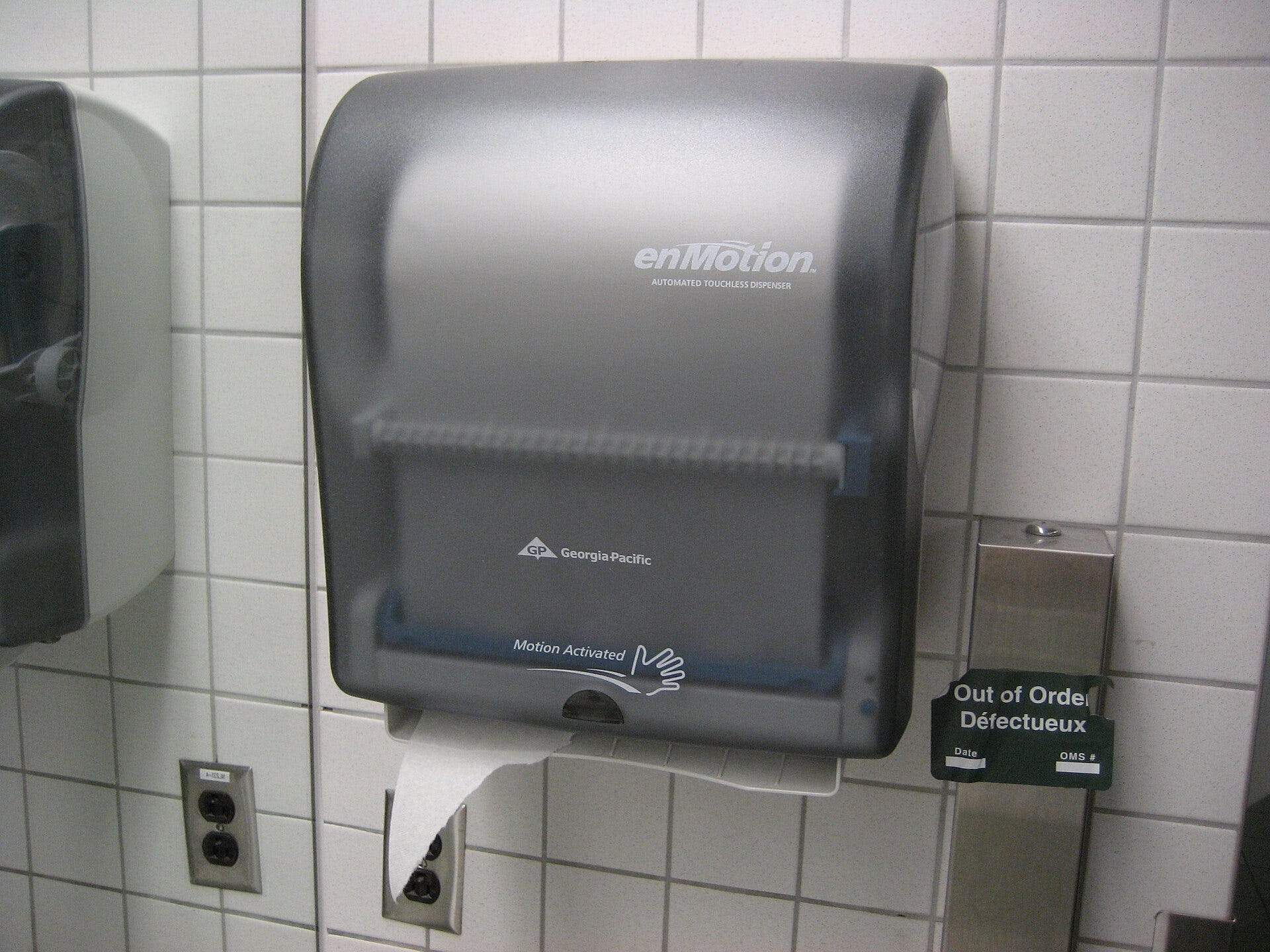
Honestly, it sounds like a racket. As a layman, I never even thought about any of this, but it’s kind of crazy that some soap dispensers have a special key so only one company’s refills fit. It just seems so backward. It also reminds me of the whole closed-source vs open-source AI debate happening right now.



So once a company’s dispensers are on the wall, switching to a cheaper soap means swapping the hardware too. The soap dispenser is whatever came with the current soap deal, and nobody picked it to match the tap.
Rules and money shape the sensor itself, too. US plumbing codes cap public taps at 0.25 gallons a use, and one popular sensor tap ships set to exactly that, with a 30-second cutoff. Battery life is a selling point as well: one towel dispenser advertises five years, “double that of the leading competitor.”
Okay, after learning all this, on my next public washroom visit I’ll be looking at the tap and anything else gesture-controlled with a bit more empathy, and with a better sense of where my frustration should be pointed. It’s not fair to just point it at the mall’s management. It’s whoever built the mall, the contractors, the engineers who picked the plumbing, the cleaning company and its soap deal, the people tuning the sensor, and the government’s water rules.
Yeah, who would have thought washing your hands could be that complex?